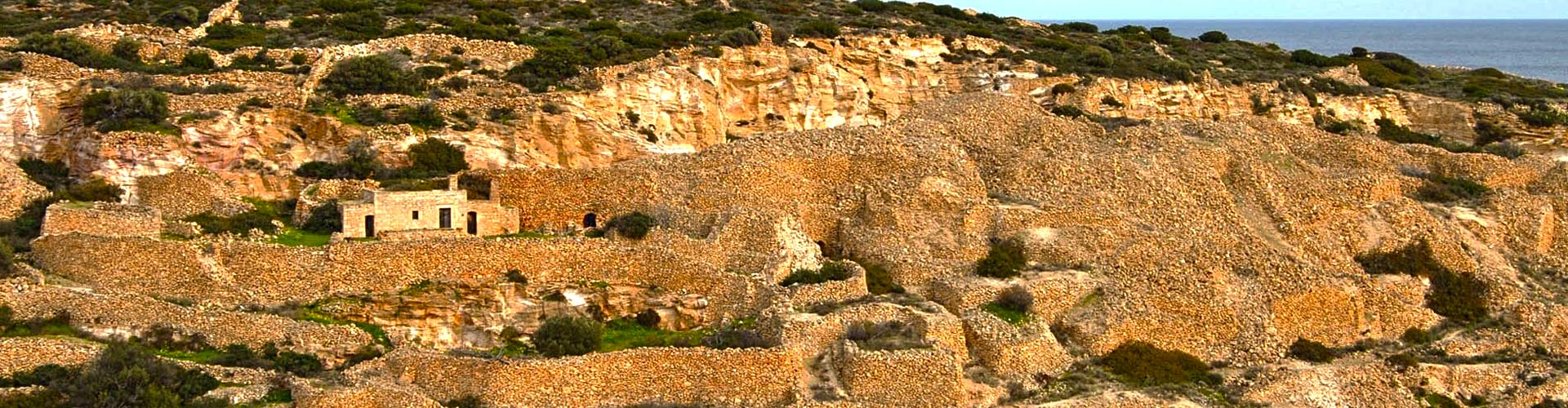
Archaeological Museum of Kimolos

The Archaeological Museum of Kimolos is located in Chorio. It is housed in a traditional two-storey building, the oldest of the village. The history of Kimolos is represented on the 1st floor of the building, in 3 rooms with a total area of ​​approximately 65 sq. m. The exhibits show that human presence and activity on the island begins from the prehistoric times. Most of the findings you will see in the Museum come from Ellinika area, the islet of Agios Andreas and the acropolis of the ancient city.

English

Folklore Museum of Kimolos

The museum is housed in a two-storey building in the Castle of Kimolos. The purpose of this museum is to preserve and maintain the old folk heritage and the past of Kimolos and hand it over to future generations. It was rebuilt due to a partial collapse and its original shape was restored.

English

Medieval Castle of Kimolos

The medieval castle (14th or 16th century) has a square shape and consists of two blocks of houses (the one surrounding the other) and a small number of houses in the center. There were 123 two-storey houses which hosted one family on the first floor and another on the ground floor. Between the two rows of houses there used to be a road, so narrow that it could only fit small carriages. There were two gates: the Lower Door to the south, in the Market street and the Top Door on the east side, next to the Folk and Maritime Museum.

English

Panagia Odigitria

This Cathedral was built between 1867 and 1874 with the personal work of all the island's inhabitants, who worked on this major project for seven years, free of charge.

Among the paintings, you will find the beautiful painting of Virgin Odigitria which probably dates back to the15th century and comes from Constantinople or Thessaloniki.

 

English

Polyaigos Islet

At a distance of one nautical mile and to the Southeast of Kimolos, you will find the island Polyaigos (meaning “island with many goats”). It covers an area of about 18 sq. km. and it is the largest uninhabited island in the Aegean and one of the largest in the Mediterranean. There is evidence that the island was inhabited from the Mesolithic or Neolithic Age. Because of its mineral wealth, Kimolos and Milos started litigation over the ownership of the island (416 B.C.), which ended in 338 B.C. and the island came under the administration of Kimolos.

English

Goupa

The fishing village of Goupa is one of the most picturesque of the island. Here you will see the Impressive caves that are “carved” in soft rock and where boats are anchored.

English

Pages

Subscribe to travelfind.gr RSS